Three years ago the war in Ukraine began. Since then as part of the Emergency Coordination of the Focolare Movement we have been supporting the population with various interventions to support medical care, to ensure health in the Kharkiv and Vinnytsia regions, where many internally displaced people have found refuge.
Health care is one of the urgent needs in Ukraine, three years after the Russian invasion began. There are many people, especially the elderly, who do not have the opportunity to care for themselves and who-often displaced from the areas most affected by the war-are living in extremely vulnerable conditions: it is not always easy to take care of yourself and your health if you do not have the strength and means to do so.
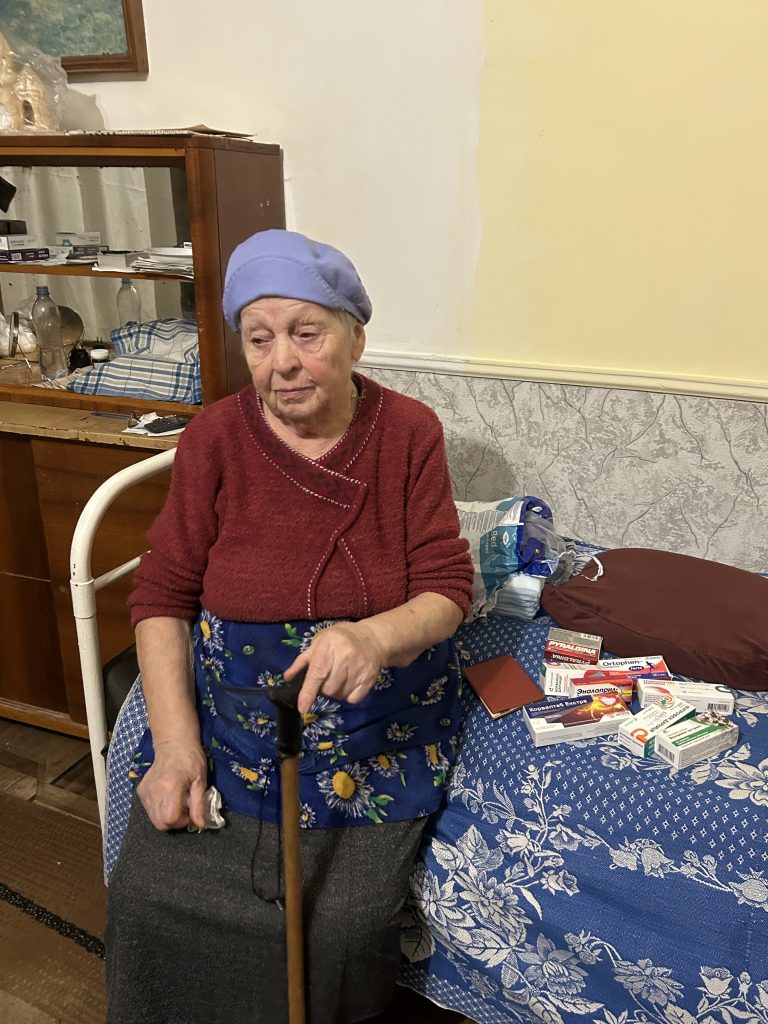
When the medical assistance project team entered Halyna’s small apartment in Kharkiv, they immediately noticed the delicacy of the situation. Halyna is 81 years old, and she needed some medical supports that she could in no way procure on her own. In her own home, her husband and sister, both older than her, also live. All three of them displaced, all of them fled their lands to find a safer haven where the bombing did not come. Husband and wife were from Vovchansk, while Halyna’s sister was from the Kherson region.
Nadya, Halyna’s sister, has not only left her home far behind. She also had to bear a great loss: the death of her daughter, killed while in a supermarket that came under Russian bombs.
In Kharkiv, the three elders were trying to rebuild some normalcy by sharing a small apartment consisting of one room. But the trauma of the war has left a deep furrow on their lives. All three have health problems.
Halyna suffered a stroke that left her with paralysis in her legs. She is now unable to walk. Her husband, Mykola, developed post-traumatic stress disorder, which led to partial vision loss. Nadiya, on the other hand, suffered a stroke after the loss of her daughter, and is now in very fragile health.
When the doctor examined them, it was clear that theentire family urgently needed assistance and prescribed and distributed medication to all three. But the medical team of Caritas-Spes in Kharkiv, which receives support from Emergency Coordination through the Ukraine Emergency Project, did much more for these people: it gave them back a sense of hope and dignity albeit in the midst of a very difficult situation. The two women and the man living in this small apartment in Kharkiv felt less alone, no longer abandoned to themselves. And this aroused deep emotion in them: it was a salvation in a time of despair.
Support the population through the Ukraine Emergency Project